

“This post contains affiliate links, and I will be compensated if you make a purchase after clicking on my links.”
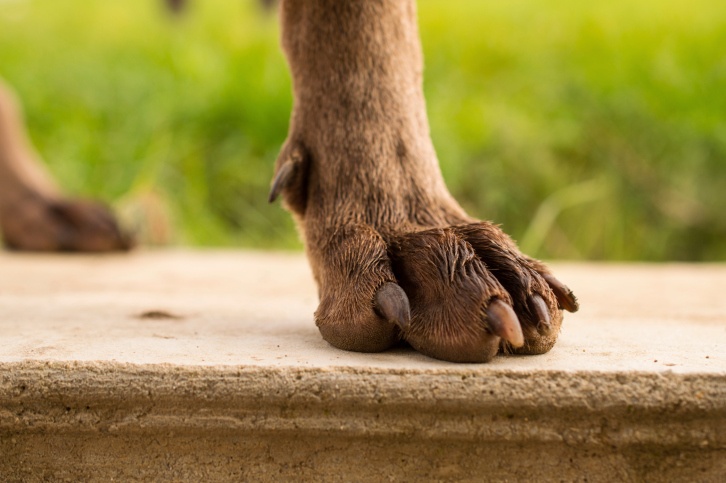
Dewclaws, also known as a dog’s thumb, refers to a vestigial digit found on the foot of most mammals, reptiles, and birds. It normally grows high on the animal’s leg in digitigrade species (digitigrade refers to an animal that walks on its toes, not touching the ground with its heels, like a dog, cat, or rodent). Dewclaws are most commonly known in canines, and these are often removed in puppies. There are some debates, however, on whether the removal of dewclaws is necessary.
Understanding the Basics
· Dewclaws in Dogs. Almost all dogs have dewclaws on the inside part of their front legs, and sometimes, also on their hind legs. Unlike front dewclaws, rear dewclaws usually have little bone and muscle structure. There are times that some pooches even possess more than one dewclaw on the same paw. At least one of these dewclaws is normally poorly connected to the leg, and is often removed surgically.
· “Double-dewclawed”. If a dog has additional dewclaws aside from the usual one that’s normally found on each front leg, the dog is then regarded as “double-dewclawed”.
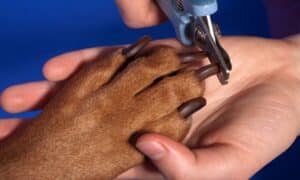
· Does it have a meaningful function? There are some arguments as to whether a dewclaw aids dogs in gaining traction when they run since, in some breeds, the dewclaw makes contact while they’re running and the dewclaw nail wears down in the same way that their other toenails do, due to contact with the ground. Nevertheless, in some breeds, the dewclaws never touch the ground, and in this case, the nail of the dewclaw doesn’t wear away. In order to keep the dewclaw nails to a safe length, owners must trim them down regularly.
· Are dewclaws lifeless appendages? No, dewclaws are surely not dead. As a matter of fact, these digits are used in lightly gripping bones and other objects that pooches hold with their paws. But in some breeds, dewclaws may not seem to be joined to their legs at all, except by just a flap of skin. In this case, these dogs have dewclaws that aren’t useful for gripping since their claws can be easily turned or folded.
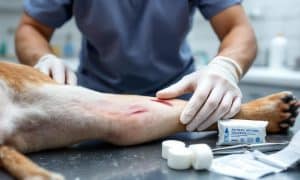
· Should it be surgically removed? Because dewclaws are weak digits which are barely attached to a dog’s leg, some people argue that it should be removed. For them, the dewclaws can rip off the pooch’s leg or easily catch on something hazardous, and then break; causing extreme pain and putting the animal at risk of infection. Nevertheless, because there are those who also believe that the pain of eliminating a dewclaw is already far greater than any other possible risk, many countries have made dewclaw removal illegal. There is, however, an exemption for hunting breeds which sometimes tear their dewclaws while running over grown vegetation.
More often than not, dewclaws are left intact nowadays. However, it’s important to inspect these “extra toes” regularly and keep the nails clipped short to avoid painful overgrowth, since they don’t wear down by walking like your dog’s regular toenails do. In fact, if left un-clipped, dewclaw nails tend to grow in a curve, embedding themselves into the dewclaw pad.
Does your dog have dewclaws? Are they just in the front or on all four of his legs? What special care do you give these extra toenails?











PK
Jan 3, 2019 at 4:43 pm
I would like to mention that I saw labs and similar hunting breeds use their dew claws as leverage to pull themselves out of the water onto ice. The video clearly demonstrated that we should consider the fact that all uses should be respected and just care appropriately for these appendages, so that they are not caught on something. A ripped dew claw is a candidate for infection and considerable pain for your pup.
Pat Baker
Dec 22, 2018 at 12:41 pm
I wanted to know if a dew claw that has been vet removed can grow Back on a foot same spot?
Pat Baker
Nora
Jul 13, 2016 at 11:56 am
Very helpful.
Crystal
Dec 7, 2015 at 5:51 pm
We have an Anatolian Shepherd, with dew caws. They are floppy. She keeps her nails trimmed all by her self. I have never had to trim them.
Jerry M Curren
Nov 15, 2015 at 1:16 pm
Have always wondered why dog’s have dew claws, now i completey understand. I have a Shitzu-Maltz mix, almost , 11 yrs old, his name is Oreo. Thank you for your Wonderful information concerning this subject! I found it because of an article on the internet about Animal Abuse Registery bei being pu put into place in one State! Hopefully this w will get other States to Push to g get this Law Passed Also !!!!!
Janet T-H
Nov 12, 2015 at 7:31 pm
i have two rescue shih tzu’s . one 5 got as puppy , one 8 plus just got her from shelter before she was supposed to be put to sleep . she has problems but is so sweet and loving and good . we are very happy with her . our 5 yr old one has curled dew claws on back paws , i had not ever seen it until latest groomer cut her hair short and found it it looks like a curled up snail but does not seem to bother her, i am afraid to cut it , and so was she . no other groomer ever mentioned it . so should i get it cut off, out or trimmed ? ? i don’t know if i will find this site again so please send your thoughts to my email address . thanks
Emily
Jan 3, 2016 at 11:39 pm
Hi my rescue dog also has dew claws and my aunts did too. If they are so long that they are imbedded or are VERY close to being imbedded, then I’d advise you to see a vetrinarian. Otherwise if you think you can, look up how to clip nails and be wary, only cut small intervals so as not to hit a quick. Also in the future you can buy an electric dog nail filer. My dogs dont love it but they will sit through it and I have NEVER hit a quick with it! (some are pricey so make sure to look around I got mine at a little retail store for 20$.)
S.
Sep 6, 2015 at 12:45 pm
My 17 year old Pomeranian has both his front dewclaws, and was born without the back ones. I keep them clipped if they get too long. He continues to use them for holding items and grooming his face, and when he was younger he did use them for traction. A relative’s 15 year old Schipperke has no dewclaws (they were cut off) and has crippling arthritis, she is barely able to get around while my dog can still go up and down the stairs on his own just fine. Chris Zink, DVM, PhD has suggested that the removal of dewclaws is a contributor to arthritis in dogs as when the dewclaw is removed a tendon is cut that prevents excessive torque.
Pamela Bolton
Sep 4, 2015 at 4:50 pm
I rescued a Lab/Chow mix two years ago and she has literally kept my legs torn up with these claws. What would normally be a scratch on others, ends up as wounds on my legs. No sooner do I get them healed up, here she comes again, and I have another set of wounds to tend to. Would LOVE to have them removed but to me it is like “declawing a cat” and I am HIGHLY against that. So I just nurse my wounds and continue to love her.
“
Amy
Aug 24, 2015 at 9:43 am
My 18 lb Yorkie had single dew claws on the front paws. The dew claw on his right paw was deformed and ended up with a benign cyst growing where a normal nail should have been. His veterinarian removed the cyst and the deformed dew claw during a teeth cleaning since he would already be under anesthesia. His other dew claw remains normal and intact. It grows super fast and tends to curl when it gets too long. I trim and file it when I do his other nails.
Mary Lynn Childerston
Apr 29, 2018 at 6:30 pm
Hi! What do you mean by super fast? I was Shocked when I discovered that both dewclaws on my little yorkie’s feet had embedded into his pads even though he had been groomed a little over 3 months ago. When I spoke to his groomer, she said the nails just grow that fast but I think she may have just forgotten to clip them ..??
Aoífe T
Aug 21, 2015 at 4:50 am
My dog is double dewclawed which I think is endearing and makes her somewhat unique. The back ones are weird because they are only attached by the skin and so can be easily moved around in weird angles without it bothering my dog. They can be fun to play with and wiggle and I just find them to be such an adorable phenomenon. The back dew claw nails tend to grow out and curve so it’s important to keep them trimmed (unfortunately my dog gets upset when we trim her nails, but it must be done). Weirdly enough we haven’t had any problems with her back dew claws but it’s her front ones that often get badly broken or torn.
Lysa Jump
Jul 15, 2015 at 4:33 pm
I have a mini schnauzer with dew claws and one without, I’ve noticed that when they’re groomed no one ever trims his dew claws even when I make a request to have it done. I’ve since just done then myself but always wondered why different groomers even from different states never trimmed his dew claws. He uses them with toys and chewing on “bones”.
Cara
Jun 5, 2015 at 1:47 am
I’ve had 3 dogs two chihuahua mixes and a lab mix. They all had normal dew claws and never had problems with them. The lab had very short claws because he always ran and dug. He looked like a cartoon character when he dug because half the time both of his paws were off the ground. My family has mostly mixes and they seem not to have very few health problems.
Kristal B
Jun 4, 2015 at 9:42 pm
My little Chihuahua mix has 2 dewclaws on each back foot! And so did his momma. I kept them intact & always keep them trimmed. He has gotten it caught on a blanket twice.
Keith
Jan 15, 2015 at 8:25 pm
My last dog (Westie) had no dew claws at all…got her from an in law via a divorce but he can’t remember if he had them removed as a pup. The Ridgback i had before that had all four paws, connected dew claws and i left them. Kept them clipped and with all his running through the brush chasing coyotes and rabbit he never had any problems with them. My two new pound dogs, one Schnauzer/dachshund mix has the front ones connected, which i’ll leave, but the poodle/terrier mix doesn’t have any
Kez
Dec 13, 2014 at 8:10 pm
We have a Maremma pup who has unattached rear leg dew claws. As these dew claws cannot serve a purpose because they have no bone, and they are at right angles to the leg, we will be having them removed. The front paws also have dewies but these are attached and functioning. They will stay. Our vet approves of our decision. He said the rear, unattached dewies removal will be simple and recovery time is short.
Ann
Oct 30, 2014 at 7:50 pm
My golden retriever and one other of his litter mates were born without visible dewclaws. But you can feel little bumps on his front legs under his fur where they should be. It has not been a problem so far.
Lexi
May 7, 2014 at 3:33 am
My new rescue is a sweet poodle mix pup who is less than 20 pounds at the moment. He has no front dew claws, but he has double back dewclaws! Is this a genetic fluke? The first dew claw is fully developed, and directly opposite is a smaller dew claw, not fully “unfurled”. He is 6months and I am anxious to see if that extra dew claws develop properly. Thanks for any information!
Shelley
Dec 21, 2013 at 10:52 pm
My puppy’s fron left dewclaw is so small I can’t see it properly. He is in no pain but I’m so scared it will grow into his paw. The right dewclaw is normal I can see it clearly to trim it. Is it normal for dewclaws to be like this?
Angela
Dec 18, 2013 at 12:01 am
Dropped my Aussie CAttle dog off this morning to get her front dew claws removed. She’s 4 and a half and has had multiple incidents with one or the other of her dew claws in the past years. Usually the whole claw lifts and the vet or myself could quickly wrench the nail out and it would heal and grow back with only a little discomfort and some antibiotics, but today it split all the way down into 3 sections and required anaesthetic to remove the nail. Since this is clearly an ongoing problem for her I made the decision to have both the dew claws removed to prevent further occurances. Feeling guilty but I think I have made the right decision.
tina
May 16, 2014 at 1:15 am
My little mixed breed is always tearing his dewclaws. As soon as one is healing nicely the other one goes. I can’t keep them short enough without cutting into the part of the nail you shouldn’t cut. It is very painful for him each time it happens. It is also painful having the vet trim it under the skin where it grows from. It takes antibiotics & anti inflamatory meds and makes him sad. I have NEVER had our animals dewclaws removed and didn’t even know it was possible to do. But this pooch really needs it done. Three times a year or more vet visits for this problem & seeing him in pain repeatedly has made me feel for this particular dog it is necessary to remove. The problem is he came from a rescue organization that makes people sign a paper stating no declawing of dogs or cats or they can take the animal back. Which is too bad because it seems cruel not to do it at this point.
michele
Jul 8, 2014 at 11:57 pm
If you have paperwork from the vet showing the past injuries to the dewclaws, most rescue organizations will go ahead and let you get them removed.
Pool
May 1, 2015 at 7:57 pm
why would some animal rescue group have any input into an individually owned pet ? i would have to ask some non-governmental group for permission how best to treat my pet (with licensed vet input/care) ???????????
Deni
Jan 25, 2019 at 11:49 am
I feel the same way with my rescued Sheltie. They can and will remove the dog if she’s not taken to obedience classes!!
Linda Trunell
Dec 6, 2013 at 11:34 pm
The Lundehund (also known as the Norwegian Puffin Dog)has 6 toes on each foot – see wp.me/p3cQWk-t6
Amanda
Oct 31, 2013 at 3:28 am
Both my beagles use their dew claws like thumbs to hold things. Just need to trim the nails once a month along with the other nails.
Akiko
Dec 1, 2014 at 12:59 pm
My Harrier (genetic relative of the Beagle, Basset Hound, English Foxhound, etc) uses his dew claws for the same purpose. ^_^ I’m glad his previous owner did not remove them. I think hound breeds are one of those breeds that actively use their dew claws. Every hound breed dog I’ve had have always used their dew claws as a “thumb”. 🙂 They really use them if they’re kept as a working dog, they will use their dew claws to assist them down into rabbit burrows and such. I’ve even seen my Harrier use his dew claw to scratch the side of his nose.. lol!
Maureen Creason
Oct 31, 2013 at 12:29 am
I rescued an amazing & wonderfully loving dog from Boxer Rescue in LA who had her dewclaws removed before I got her, I assume from her previous owner. She was loving and precious with people but unfortunately overly aggressive with other dogs, her entire life. I never doubted the removal of her dewclaws as a bad thing. She certainly never seemed to miss the appendages.
Richard Lawrence
Oct 30, 2013 at 12:50 pm
If God didn’t mean dogs to have dewclaws he wouldn’t have given made them as part of their body. A bit like an appendix in a human. We can live without them, but they must have been there for some reason in the first place. I am quite happy to clip them on my dogs when they get too long.
Jennifer Inch
Oct 12, 2013 at 9:24 am
We are now on our second dog with hind dewclaws. We had the hind dewclaws surgically removed during the neuter on the first dog, at the vet’s recommendation.
The current dog with them will get to keep them.
Apart from the perceived ‘risk’ of injury, I expect a lot of removals are due to the fact that they tend to be floppy a a little creepy – a ‘toe’ attached without a real bone? Ewww. Lol. So Tigger had his removed, but Daisy will keep hers.
Lynda Thompson
Sep 6, 2013 at 8:54 am
I have a Greek rescue who looks to be mostly Greek Shepherd, he has double hind dew claws complete with bone so they are very firmly attached. I can think of no good reason whatsoever to have them removed, I believe this is akin to docking which I also don’t believe, in 99% of cases is necessary.
The main reason given for cutting off the dew claws is that they will catch and “tear off”. Really? I have had dogs all my life, all have had dew claws, albeit one, all four or even double as with one of my current dogs, not once have they ever damaged one, caught one or “torn off” one. I agree with ChibiOkamiko, keeping the nails trimmed on them is just a normal part of the grooming routine.
のやてべ
Aug 30, 2013 at 5:17 am
you’ve an awesome weblog right here! would you like to make some invite posts on my weblog?
Sonya
Aug 12, 2013 at 8:53 pm
I have 2 dogs with dew claws front and back. One is a Great Pyr who has 2 extras on each back foot and another is a mix that has them in the back as well as the front.
Patrick
Nov 30, 2013 at 7:58 pm
The Great Pyrenees MUST have double dew claws on each back leg. DO NOT remove them. It’s the only breed that requires doubles on each hind leg. They are also stronger than random dews on other breeds. Leave them be.
tt
Feb 23, 2014 at 10:50 am
Actually, Beaucerons also require double dewclaws as well, not just Great Pyrs!
Damien Cole
Aug 12, 2013 at 6:34 pm
My 3 great pyrenees have them with double claws..but i will not remove them. I rather wrestle 3 100 pound dogs every three weeks to trim them instead!
Patrick
Nov 30, 2013 at 7:56 pm
Love it!
Jeri Bell
May 23, 2013 at 8:12 pm
Our husky/lab mix was born with double dewclaws on both her hind legs. We had them removed at the same time we had her spayed. We could just see her snagging them on something and ripping them off. They were so loosely attached they flopped when she ran or walked, however it was major surgery to remove them as they were attached to an undeveloped toe under the skin which also had to be removed. 4 stitches on the back of each leg. I did some research and as I understand Great Pyrenees are nearly always born with double dew claws on the hind legs but it is rare on this breed.
Alyse Tarrant
Jan 22, 2013 at 12:35 pm
We had my dogs dewclaws removed when he was about 6 months old. He was going to be under anesthesia for another proceedure and had continued to catch his dewclaws on blankets and pillows etc. So, since he was already going to be out, we decided to get his dewclaws removed. NOW, I WISH WE WOULDNT HAVE. When they removed the claw on his right front paw they went too deep and left him with nerve damage and a never ending LIMP. It doesnt seam to be in pain when you touch it and it did heel well, however whenever we take him somewhere people always say hes hurt or ask why hes limping? Talked to a couole different vets and they say the limp couldnt possibly be from the proceedure however, he never limped before and hasnt stopped since we took him home……..
Rina_chan21
Jan 22, 2013 at 10:43 am
Our Golden Retriever has dewclaws on his front paws, we always trim them while we trim the rest. We adopted a Golden Retriever mix recently and while her dewclaws on her front paws are tiny just like our other dog’s, the ones on the back have a dewclaw pad that’s almost as big as one of her toes and they don’t seem to be articulated. I thought these would bug her when we put boots on in the winter but it seems fine, I’m glad we didn’t have them removed!
ChibiOkamiko
Jan 22, 2013 at 10:24 am
I have never removed my dog’s dewclaws and never had an issue with them. Keeping claws trimmed is part of the maintenance grooming I have to do (seems like that’s part of the “well duh” of pet ownership). And as for them getting caught on vegetation, I live on five acres of woods and have never had any dewclaw injuries either. If a dog of mine did have an issue with getting them injured, that’s when I would consider surgical removal.
bindifry
Jan 22, 2013 at 9:12 am
thank you! my older dog has that issue of it curling & embedding it into her leg. she spends time trying to clip it. its really sharp so i’ve been cutting off the tip regularly. i was wondering about this issue 🙂
kris z
Jan 22, 2013 at 9:01 am
all of my dogs have had their dew claws removed. one dog had one of the dew claws grow back.. it is a bit twisty but not an issue. i would always want them to be removed.
Patrick
Nov 30, 2013 at 7:55 pm
My Great Pyrenees will never have her double dewclaws removed. It is the breed standard (double on both legs) and they serve a practicle purpose in the snow. They’re also not as flimsy as dewclaws that show up on other breeds. The only breed I know of that requires them as a show strandard is the Great Pyrenees.
Gindy51
Jan 28, 2014 at 11:28 am
Beaucerons do too as do many herding breeds.